
How do we track performance data?
Monitoring Training Performance
Monitoring performance is not just for athletes. Objective data can be used to optimize strength gains, reduce the risk of injury due to over training, and individualize exercise intensity - No more one-size-fits-all workouts!
Force Plates
What: Force plates, using pressure sensors, measure the force that are exerted on them, typically from a person standing or jumping, and the force exerted on the person by the plates - this is the ground reaction force (GRF). The video shows a standard force-time curve during a counter movement jump (CMJ). Key indicators from these force-time curves can be used to infer and monitor neuromuscular fatigue and daily "readinesss" to train.
Fatigue Monitoring: Observing reductions in measurements taken from force plates - like, vertical jump height, rate of force development, and reactive strength index - can be an indication of accumulated fatigue and lowered readiness.
Programming: This objective data can help coaches and trainers adjust training workloads in real-time to reduce the risk over training. Appropriate training load has the added benefit of optimizing recovery and training adaptations.
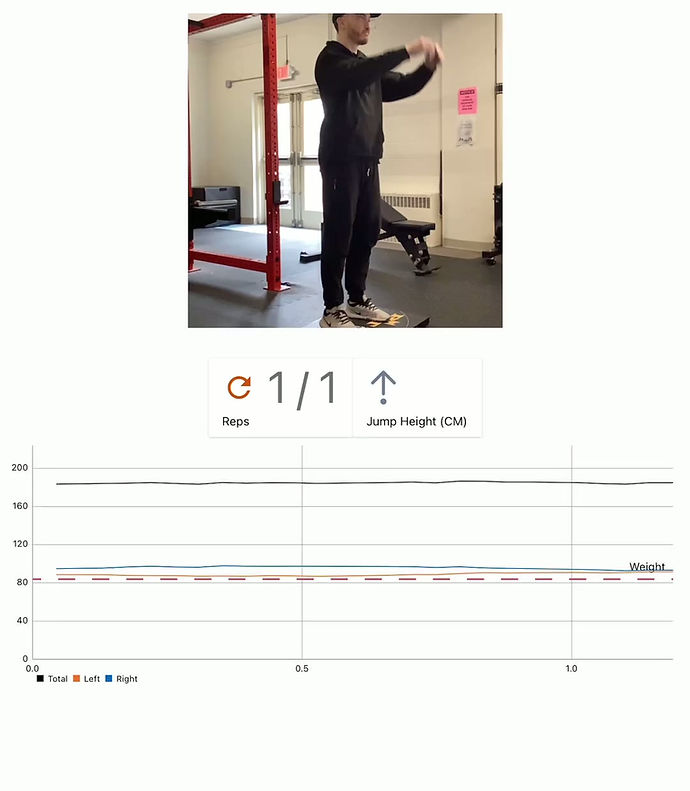

Velocity-Based Training:
Linear position transducer
What: An LPT measures the displacement of a moving object. In the video, an LPT (not pictured) is tethered to the barbell and provides displacement and velocity feedback, displayed on the tablet, in real-time.
Fatigue monitoring: Tracking velocity from rep-to-rep provides a useful metric of fatigue, mitigating accumulated fatigue while maintaining power output.
Autoregulation: A decrease in velocity output for the same weight between days could indicate fatigue. This information allows the athlete to adjust their workout in real time, and choose a weight/intensity that allows them to still work within their target velocity zones.
Speed and agility timing gates
What: Our timing can be set up to measure typical speed tests, like 10m and 30m sprints, or measure change of direction drills, like 5-10-5 and T-test.
Objective data tracking: laser timing system is used to record highly accurate measurements for linear speed and change of direction drills.
Advanced Analytics: In addition to the laser timing system, we are able to track velocity, force, and power.


Force dynamometers and muscle strength
What: A dynamometer is used to assess muscle strength by measuring the amount of strain placed on it through electrical signals which are then converted to an amount of force. The video shows a dynamometer measuring pulling force during a seated knee extension, but other dynamometers can be used to measure pushing force or even grip strength.
Muscle Strength: Dynamometers are very useful to detect asymmetries and muscle imbalances between limbs and track progress of targeted training programs.
Surface Electromyography (sEMG)
What: sEMG, using electrodes placed on the surface of the skin, measures electrical activity of muscles as they contract.
Compensatory patterns: In sports performance, sEMG is often used to study muscle coordination patterns - to ensure equal distribution of work an minimize compensatory patterns - and monitor fatigue.
Real-time feedback: Recorded data are displayed in real time, usaully in an app, giving the athlete objective biofeedback about muscle activation. The video on the left shows the activation of the biceps brachii during elbow flexion.


Digital Goniometer
What: Digital goniometers are used to measure joint range of motion. They provide a more acurrate and reliable measure of joint ROM than the more traditional handheld versions. In the video the digital goniometer is strapped to the persons ankle as they perform a seated hip internal rotation test.
Asymmetry: Digital goniometers are especially useful to assess deficits in ROM between right and left sides. When coupled with measurements from force plates and dynamometers, we are able to understand individual movement preferences, which will allow us to make informed decisions about your training plan.